Recent Posts














































v+ICWr
No.152822
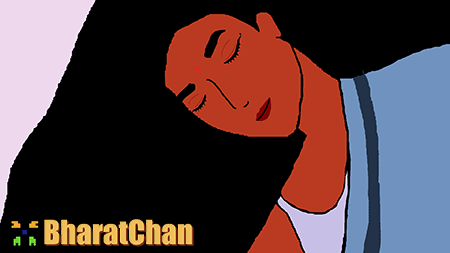
You and I deserve the best possible start at life

OC+zPv
No.152823
>>152822(OP)
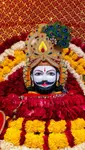
This image has nothing to do with either of those words.
PJG+4x
No.152826
>>152823
The best possible start incudes a cute waifu
dCyeuH
No.152829
>>152822(OP)
Why edit a mangalsutra?
w0SUyy
No.152833
>>152822(OP)
>In China, only the patricians practiced the rites (yi-li), while the plebeians merely had customs (su). There is a Chinese saying: “The rites are not the legacy of ordinary people,” which corresponds to the famous saying of Appius Claudius: “Auspicia sunt patrum.” A Latin expression characterized the plebeians as gentem non habent: people who have no rites nor ancestors. This is why in ancient Rome the patricians viewed the plebeians’ Lifestyle and sexual coupling as similar to that of wild animals (more ferarum). Thus, the supernatural element was the foundation of the idea of a traditional patriciate and of legitimate royalty: what constituted an ancient aristocrat was not merely a biological legacy or a racial selection, but rather a sacred tradition. In fact, even an animal may have biological and racial purity. After all, in the (indian) system the laws of blood, heredity, and endogamic restrictions did not apply only to the brāhmaṇa but to the other (indian)s as well. It was not in this sense that the plebeian was said to lack ancestors: the true principle of the differentiation between patricians and plebeians was that the ancestors of the plebeian and of the slave were not “divine ancestors” (divi parentes) like the ancestors of the patrician stocks. No transcendent quality or “form” entrusted to a rigorous and secret ritual tradition was transmitted to them through the blood. The plebeians lacked that power through which the members of the aristocracy could directly celebrate their own cults or be members of the priestly class (as was the case in the ancient classical world. The plebeians did not have the privilege of the second birth that characterized the ārya (the noble) and the Manudharmaśāstra3 does not hesitate to say that even an ārya is not superior to the śūdra until he has been born again. The plebeians were not purified by any of the three heavenly fires that in ancient Iran were believed to act as the occult souls of the three higher (indian)s in the empire. Therefore the plebeians’ religion could not help but have a collective and chthonic character. In India their religion was characterized by frenzied and ecstatic fonns more or less connected to the substratum of pre-Aryan races.
oRMxO8
No.152951
>>152833
sauce
w0SUyy
No.152953
>>152951
oRMxO8
No.152976
>>152953
ah. that shitalian