
Recent Posts




































/AIG/

LpK24o
No.150
I will start. this general is about using ai to upskill and create resumeslop projects that will get us employed. no doomering about job market 15 years from now we will all be rich till then
WAGMI
LpK24o
No.151
Today i took an old project I had made. i didnt use git so i didnt have a git history. i used google antigravity to make a fake git history and upload to github. now it looks like i had been working on it for 2 months


zeE8OL
No.153
>>150(OP)
i am working on audio transcription, audio cleanup etc at the moment. super interesting stuff. very time consuming and at times frustrating, esp. the manual cleanup part.

JwIGfZ
No.154
>>151
Lmao
LpK24o
No.155
>>153
so like prompting or like discrete fourier transform and low/high frequency filter?
Kbzhul
No.158
>>155
so there are a few things:
a. ai based cleanup: using tools like elevenlabs, and others. they just have standard presets that may or may not work for your audio.
b. manual cleanup: removing noise from audio depending on the need. using tools like audacity, garageband and some paid ones like filmora etc. there are a lot of these tools.
c. using ml models: there are some models and python libraries that help you to remove silences, denoise, audio normalization, chunking etc.
d. once the audio is in decent state, use ml models for audio transcription depending on the language
e. once the transcript is generated you enhance it, remove typos etc using gemini or other ai models
Kbzhul
No.159
>>155
>DFT
i have not applied it yet. tbh i am not sure what it does to the audio. i have forgotten about it :(
>low/high pass filter
yes this may need to be applied after removing noise from the audio. if the audio is clean right after removing noise, then you can skip this step.
Kbzhul
No.160
>>159
additionally using code to do this is not much reliable. it may work for one audio but it qon't for others etc. there is a lot of experimentation involved.
LpK24o
No.161
>>159
sound (file) is a sequence of amplitudes. they are produced by summing up of sin waves of different wavelengths (1/frequency)
dft (and cosine transform if you want also works) decomposes this to the component frequencies. your brain does this automatically. when you hear a "high pitch" sound it basically means the coefficient for some high frequency is a large number
by doing dft or dct you can get the contribution of each frequency to the final sound and from this you can isolate instruments based on high/low pitch, remove noise etc
LpK24o
No.162
>>161
even if the sound isnt made of sin waves it is a good assumption to make. also without dft if you are just doing low and high pass on amplitude you can remove some noise but by doing dft and removing very high frequency noise you can get a better result. typically intended noise is lower frequency
LpK24o
No.163
>>162
theoretically if you know your neighbours drilling machine vibration speed you can just remove that frequency. sounds like it would be cool to try it
yaga9b
No.177
>>167
you kindly have a spectral/cepstral option of you aren't coding. spec is result of dft with some processing. ceps is dft/dct on top of spectral because voices trend to come in multiples. eg the same sound would sound 30, then it would also spike 60,90,etc
Zm33sn
No.180
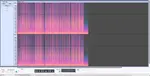
>>177
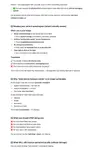
okay this is very helpful. wasn't expecting anyone to know about this lol. a little background on the audios i am working on.
<audio
>recorded in 80's
>single person giving a public speech
>few audio files are extremely noisy due to them being recorded on a casette from another casette recording (not live)
>noise consists of constant background hum + white noise + at random points loud noises.like furniture getting fixed etc.
>ai based apps like elevenlabs, adobe podcast, podcastle etc, did not help in cleaning up the audio
>most of them can't tell apart signal from noise and give out empty audio as a result of cleanup.
<ai generated code for cleanup
>no luck, it did not clean the audio directly
<manual cleanup was the next best thing
>audacity and garageband
>small/medium success with noise reduction + clip fix + noise gate effects + applying a generic megaphone equalizer afterward.
looks like audacity uses DFT itself for the cleanup, as a part of the noise reduction feature.
thanks a lot for the pointers on the spectrogram. the audio i have is some 30-40 mins long.
going by chatgpt i have reached the limits of cleanup already. but will spend some time tomorrow on polishing it.
either if i get a transcription or an understandable audio will be a win for me. ideally i am shooting for both.
thanks again anon!